Friday, June 22, 2012

What you can learn about dealing with stakeholders from a garage sale

It rained all the day of my neighbourhood garage sale, so we decided to hold over our sale a couple of weeks until this past Saturday. It was a beautiful day and my old man hauled a truckload of stuff from his place in the east end to my place in the west end and we divided up the driveway. It was one of the most enjoyable days I've had with my dad since we did Movember. We made a bit of money, had a few beers, shot the shit for almost the entire day and good times were had by all.

What didn't dawn on me at the time, but what I realise now, is how much you can learn about dealing with stakeholders from/by running a garage sale. Here's what I mean.


Photo by Chiot's Run
Don't be afraid to just give things away

There was a little girl who bought some books and then doubled back for a plush toy. She had a bit of trouble deciding which one she wanted but when she finally settled on the unicorn, I simply let her have it.

Sometimes you need to just be willing to give something away for nothing but karma in return; especially when that thing has no value to you, but has value to someone else. It's the gift economy, so when dealing with stakeholders ... 


Don't attach arbitrary value

Over the course of the day my dad and I lamented how cheap some people were; how they wanted a lot for almost nothing in return. But as the day went on I realized that haggling over the price of a $1 dollar item is senseless given that the item in question held no value for me until it held a value for someone else. Often I think when organizations engage with their stakeholders, they are reluctant to make concessions or accommodations because they feel as though they are losing out, when really the substance of these concessions held no value to the organization before they were asked for them.

Furthermore, we forget that the sum of any given exchange is often far greater than we originally anticipate, and when we engage with stakeholders we often limit our evaluations to the tangibles that exchange hands rather than how that exchange effects the relationship between parties. In a one-off exchange (such as at a garage sale) we are more likely to take a hard line stance than in an iterative relationship where what I do now has downstream consequences. I suppose that's another key point...


Turn a one-off into an real relationship

There was a woman who was interested in purchasing our double stroller. She had one infant and another on the way, only she didn't have any money on her. After a quick demo I gladly put the stroller (and a dozen or so board books she wanted) aside. She went, grabbed some cash and came back. While she got a steal of deal, and I got that stroller out of my garage, both of these facts pale in comparison to the smile I saw on her face as she walked down the street pushing the stroller that afternoon. She waved and I waved back happily.

I received no such satisfaction from any other of the patrons who came by the sale. The woman who bought our stroller isn't my best friend or my business partner, but you can be damn sure that I will wave and say hello every time I see her from now on, and I hope she will do the same.


Originally published by Nick Charney at cpsrenewal.ca
subscribe/connect
RSS / cpsrenewalFacebook / cpsrenewalLinkedIn / Nick Charneytwitter / nickcharneygovloop / nickcharneyGoogle+ / nickcharney

Wednesday, June 20, 2012

WRU: Links Worth Clicking

First, I should mention that I did an interview with Microsoft which they published to their blog. Here's an excerpt:
I’m quite cognizant of the fact that I advocate for things like open government because I see the benefits to the bureaucrats working inside of those systems. But at some point, the conceptual understanding of open government is going to butt heads with the political reality of what open government can and can’t be, from the political side of things.

I think that’s where bureaucrats are going to start to get into trouble. When do you start to draw all of these threads together? What happens when public servants have greater reach than ministers, at least online, or they’re being quoted in mainstream media outlets, with their names next to ministers, perhaps being perceived as undermining the authority of elected officials because of their subject matter expertise.

You can read the whole thing here.

Second, this is a pretty cool commencement speach that went viral this week (about why the graduates aren't special):


Government of Canada

  1. Parks Canada staff banned from criticizing Feds http://t.co/PksDNA8Y
  2. Government accused of breaking law with budget secrecy http://t.co/fcCUYOEk


Implications for Public Service Renewal

  1. Narrative in public management http://t.co/ERAuNndd
  2. Why the young should welcome austerity http://t.co/0pS8zdwn
  3. A Professor's Cry http://t.co/KYkwhhqF
  4. No Naked Emperors: Have the Hard Conversations http://t.co/xqmdzLVs
  5. Warning Signs of an Unhealthy Appetite for Risk http://t.co/d7d1kiSk 
  6. On Metrics "Why Impressions Are The Most Useless Twitter Stat (And How You Can Measure Better) http://t.co/T938wtXk


For Levity

  1. I am Comic Sans, Asshole http://t.co/CLPb1MPa

Cheers


Originally published by Nick Charney at cpsrenewal.ca
subscribe/connect
RSS / cpsrenewalFacebook / cpsrenewalLinkedIn / Nick Charneytwitter / nickcharneygovloop / nickcharneyGoogle+ / nickcharney

Monday, June 18, 2012

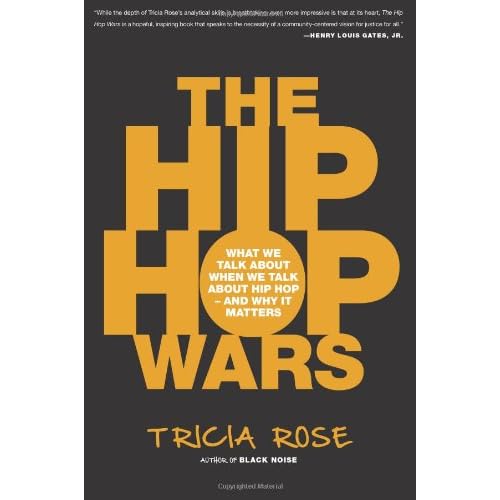
MBR: The Hip Hop Wars by Tricia Rose

I decided I was going to read a book a week for a year, here's a quick review of this week's book.  You can see the ongoing list here.

Basic Info

The Hip Hop Wars: What We Talk About When We Talk About Hip Hop--And Why It Matters by Tricia Rose


Why I read it

The community section is right next to the business section in the book store I tend to frequent. I let my eye wander and it connected with this book.

I should probably mention that I was interested in it because I was really into hip hop in highschool; little did I know when I picked it up that I would be a part of what Rose describes as the demographic that helped bring "gangsta rap" to the mainstream.


How it connects to the Public Sector


The book argues that the most commercially successful hip hop has become increasing saturated with images of "gangstas" and that this development is worth paying attention to because any discussion of hip hop doubles as a discussion about race in America.

The book is a deep dive into the reinforcing mechanics between ghetto culture and corporate America that demonstrates just how diverse a single public policy issue can be (e.g. the ghettoization of black America).


What I got out of reading it


Tricia Rose is incredibly thorough in her exploration of the issues - the core lesson for me from reading the book is that there are subject matter experts out there whom will always possess a depth of knowledge that is far greater than the one we have. So if, when making public policy, we forget that, we may stumble; and that stumble may have dire consequences.

Moreover, if we fail to explore the nuance in a particularly difficult situation we may actually exacerbate a problem rather then alleviate it; many prominent hip hop artists today (according to Rose) make precisely this mistake.

As someone who listened to a lot of hip hop when I was "coming up" I would say that this book is incredibly enlightening, if you have even a remote interest in hip hop, the Hip Hop Wars is a must read.


Originally published by Nick Charney at cpsrenewal.ca
subscribe/connect
RSS / cpsrenewalFacebook / cpsrenewalLinkedIn / Nick Charneytwitter / nickcharneygovloop / nickcharneyGoogle+ / nickcharney